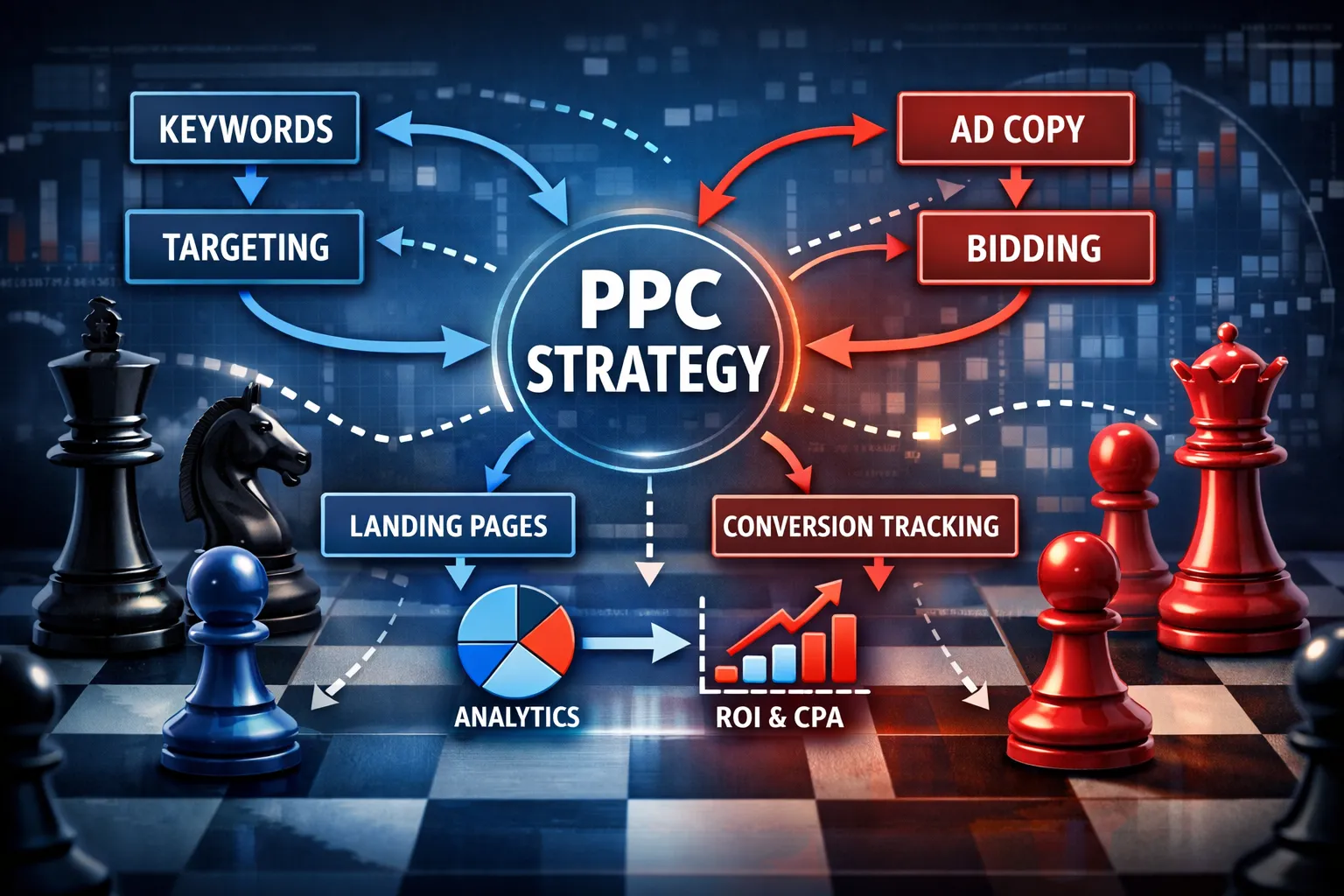
Strategy is where most sellers either win or waste money. The difference between profitable campaigns and money pits usually comes down to structure, keyword management, and bid philosophy—not the tactics themselves.
Campaign Structure
How Many Campaigns Per ASIN?
There's no single right answer, but here's a common structure that works well:
Recommended Campaign Structure
- Auto Campaign: Discovery and keyword research (lower bids)
- Broad/Phrase Campaign: Keyword expansion (medium bids)
- Exact Match Campaign: Proven winners (highest bids)
- Product Targeting: Competitor ASINs and complements
- Branded Campaign: Your brand terms (defensive, lower bids)
This gives you 3-5 campaigns per ASIN. For products with heavy variation (colors, sizes), you might consolidate similar variants into shared campaigns.
Should I Keep Running Auto Campaigns?
Yes, Always
Auto campaigns continue discovering new keywords even after you've harvested winners. Run them at lower bids as ongoing keyword research engines. They'll find long-tail terms and seasonal variations you'd never think to target manually.
Keyword Management
The Keyword Harvesting Workflow
- Run auto campaigns to discover search terms
- Download Search Term Reports weekly
- Identify winners: Terms with 2+ orders and acceptable ACoS
- Add winners as exact match in your exact campaign
- Optional: Add as negative exact in auto/broad to prevent double-serving
Should I Block Winners After Moving Them?
This is debated. The arguments:
Add as Negative
- Prevents paying twice for same term
- Consolidates data in one place
- Cleaner reporting
Don't Add as Negative
- Amazon may show different match type for different queries
- Broad match can capture variations exact misses
- More total coverage
Our recommendation: Start by adding negatives. If you notice declining impressions or sales, remove them and let campaigns compete.
How Many Keywords Per Ad Group?
Keep ad groups focused:
- Single-keyword ad groups: Best for your top 5-10 performers where you want maximum control
- Themed ad groups: 10-20 related keywords (e.g., "yoga mat" variations)
- Avoid: 50+ keywords in one ad group—makes optimization difficult
Should I Block Poorly Performing Keywords?
It Depends on Relevance
If a keyword is relevant to your product but performing poorly, lower the bid first. Only add as negative if it's truly irrelevant or has spent significantly with zero conversions. Don't block relevant keywords just because they're not profitable yet—they may convert with better listing or lower bids.
Bidding Strategy
How Often Should I Adjust Bids?
Weekly for most campaigns. Here's why:
- Daily adjustments: Creates noise. Not enough data to make informed decisions.
- Weekly adjustments: Enough data accumulates. Balances responsiveness with stability.
- Monthly adjustments: Too slow for competitive markets. Misses opportunities.
Exception: High-spend campaigns (>$500/day) may warrant more frequent attention.
Should I Bid on My Own Brand?
Usually Yes, But Strategically
If you don't bid on your brand terms, competitors will. They'll show up when customers search specifically for you. Bid defensively—low bids to win cheaply, not aggressively.
Check your brand's organic position first. If you rank #1 organically with no competitor ads showing, branded ads may be unnecessary spend.
Should I Bid on Competitor Terms?
Yes, selectively. Target competitors where you have advantages:
- Your product has better ratings
- Your price is more competitive
- Their listings have weak images or copy
- Their reviews mention problems you solve
Avoid targeting market leaders with bulletproof listings—you'll pay high CPCs for low conversions.
Seasonal & Event Strategy
Prime Day and Major Holidays
Budget Adjustments
- Increase budgets 2-3x during peak events
- Start early: Shoppers browse before the event
- Monitor hourly: Budgets can exhaust quickly
Bid Adjustments
- Increase bids 20-50% for top performers
- Competition spikes: Your normal winning bids may not be enough
- Don't bid blind: Increase based on performance, not fear
Should I Shut Off Broad Match During Prime Day?
No, but consider lowering bids. Broad match can capture event-specific variations you haven't thought of. However, CPCs are higher, so tighten your efficiency requirements.
Day-Parting and Week-Parting
Should I Adjust Bids by Time of Day?
Amazon doesn't offer native day-parting, but third-party tools do. The question is whether it's worth it:
- For most sellers: Not worth the complexity. Performance variations are usually minor.
- High-volume sellers: May see meaningful patterns (e.g., B2B products performing better weekdays)
- Before implementing: Analyze at least 30 days of hourly data to confirm patterns exist
Day-of-Week Patterns
More sellers find meaningful patterns by day of week than by hour. Common observations:
- Consumer products often peak Sunday-Monday
- B2B products often perform better Tuesday-Thursday
- Gift items may spike on paydays (15th, 30th)
Common Strategic Mistakes
Do This
- Set goals before launching campaigns
- Calculate breakeven ACoS first
- Let data accumulate before judging
- Optimize listings before scaling ads
Avoid This
- Copying competitor bids blindly
- Judging keywords on <10 clicks
- Pausing campaigns based on one bad day
- Scaling spend before fixing CVR issues
Key Takeaways
- Keep auto campaigns running even after harvesting—they're perpetual research tools
- Structure campaigns by match type for control and clarity
- Adjust bids weekly, not daily—let data accumulate
- Bid on your brand defensively; bid on competitors selectively
- Increase budgets before Prime Day; increase bids based on performance
Need Help With Your PPC Strategy?
We build and manage Amazon advertising strategies for brands at every growth stage.
Book a Strategy Call